Welcome to Aijō, the dojo for the Japanese art of rope work
As this page contains content that is not suitable for persons under the age of 18, we ask you to briefly confirm that you are 18 years of age or older and are permitted to view this content. Please click on the “I agree” button below to confirm that you are 18 years of age or older and are permitted to view this content.
Logo von Ajiō
menu
close form

The Major Osada-Ryū Kyu Exams for Europe

Next examination date: November 07, 2026

Admission is free!

What the examination is

Osada-Ryū is the rope school of Osada Steve Sensei and enables students to learn Shibari (also known as Kinbaku or bondage) from the ground up.

The structure of the school is strongly inspired by systems such as Kendo or Aikido. Therefore, Osada-Ryū also has so-called Kyu levels, ranging from 9 to 1. For Europeans, it may be confusing, as it does not start at Kyu 1 but at Kyu 9.

Our students go through these individual Kyu levels, where they learn and train very specific topics, and can then present what they have learned at the grand examination.

The greatest challenge of this examination is not mastering the techniques, but facing the examination itself—and remaining present for the person in the ropes despite the pressure.
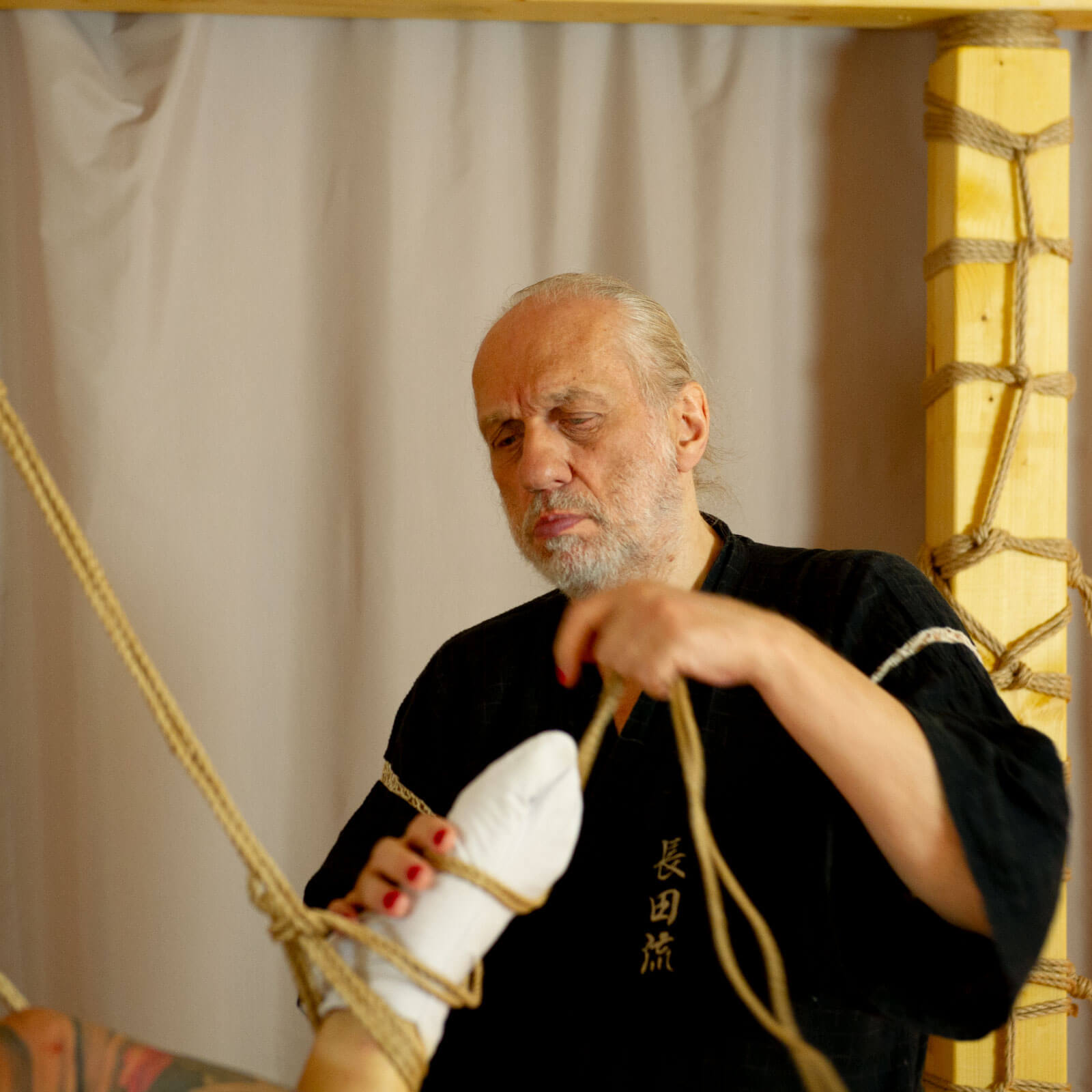
Osada Steve during his Kinbaku live performance in 2018
Osada Steve during one of his Kinbaku live performances at the Juku of Thomas Harukumo
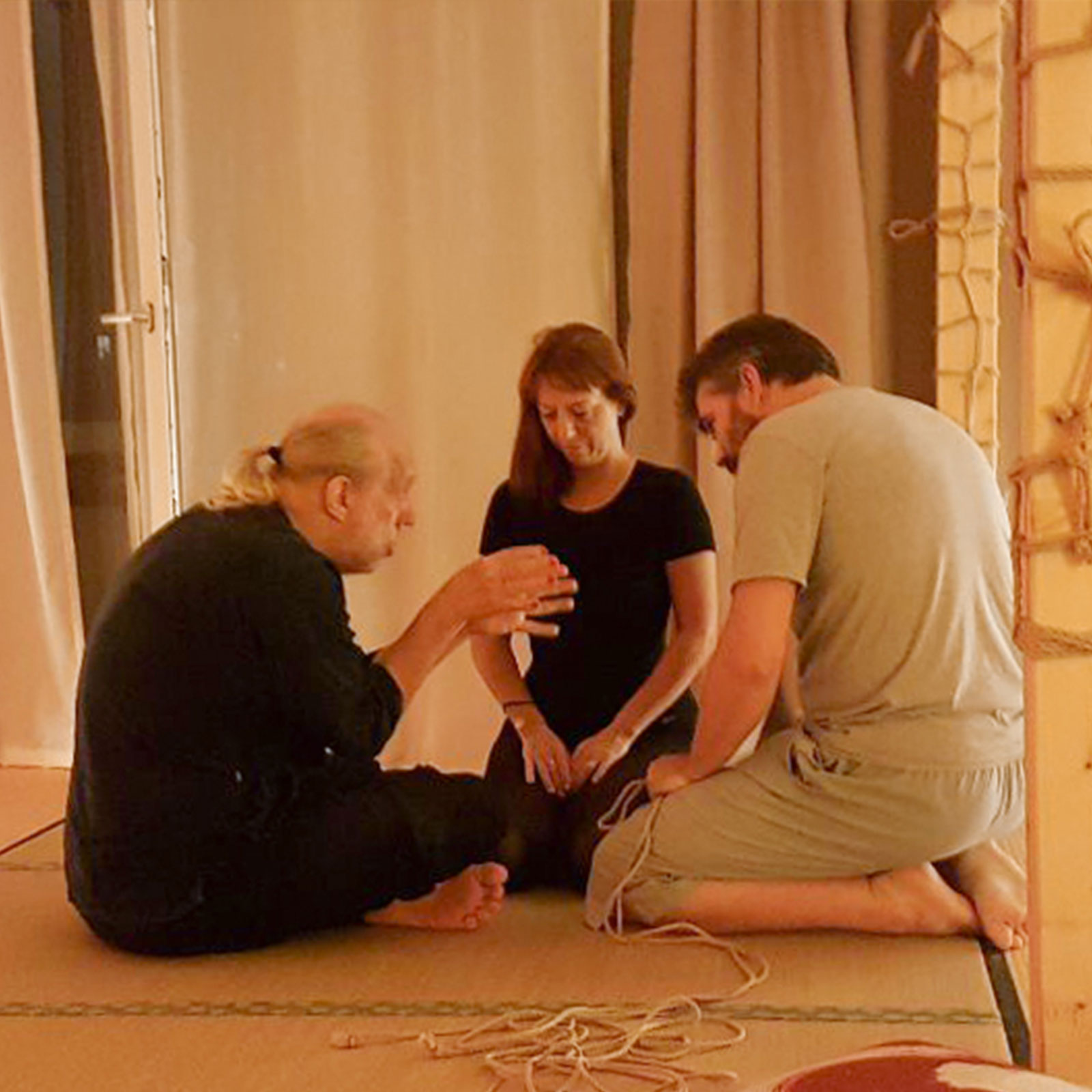
Osada Steve with Shana and Jack during a private lesson
Shana & Jack during a lesson with Osada Steve

Examination procedure

The examination is led and conducted by the instructors. Vinciens from Vienna (from the dojo "Kinbaku Studio Vienna") is the highest-ranking instructor in Osada-Ryū and leads the examination. Ibinuphis (Markus) and Jack (André) support the process.

On this examination day, all students from all Kyu levels take part. The Kyu levels are divided into groups, and these groups take the examination together. For example, Kyu levels 9, 8, and 7 are tying at the same time with the assigned topics.

The examination lasts between 2 and 3 hours per student. During this time, Vinciens assigns the tasks that need to be demonstrated.

The audience

Osada-Ryū originates from performance-based rope work. For this reason, the audience is an important element of this style. The tying is also focused on presenting the person in the ropes and highlighting beauty and aesthetics.

To honor this aspect, we invite spectators to the examination. These are usually other Kyu students who are not taking the exam, friends, relatives, partners, or people interested in Osada-Ryū who want to see how the examination works.

Spectators are asked not to disturb the students during the examination.

Vinciens explains the tasks given to the students to the audience, including background information about the individual ties. This helps viewers better understand the purpose and origins of the ties, giving them a deeper perspective.
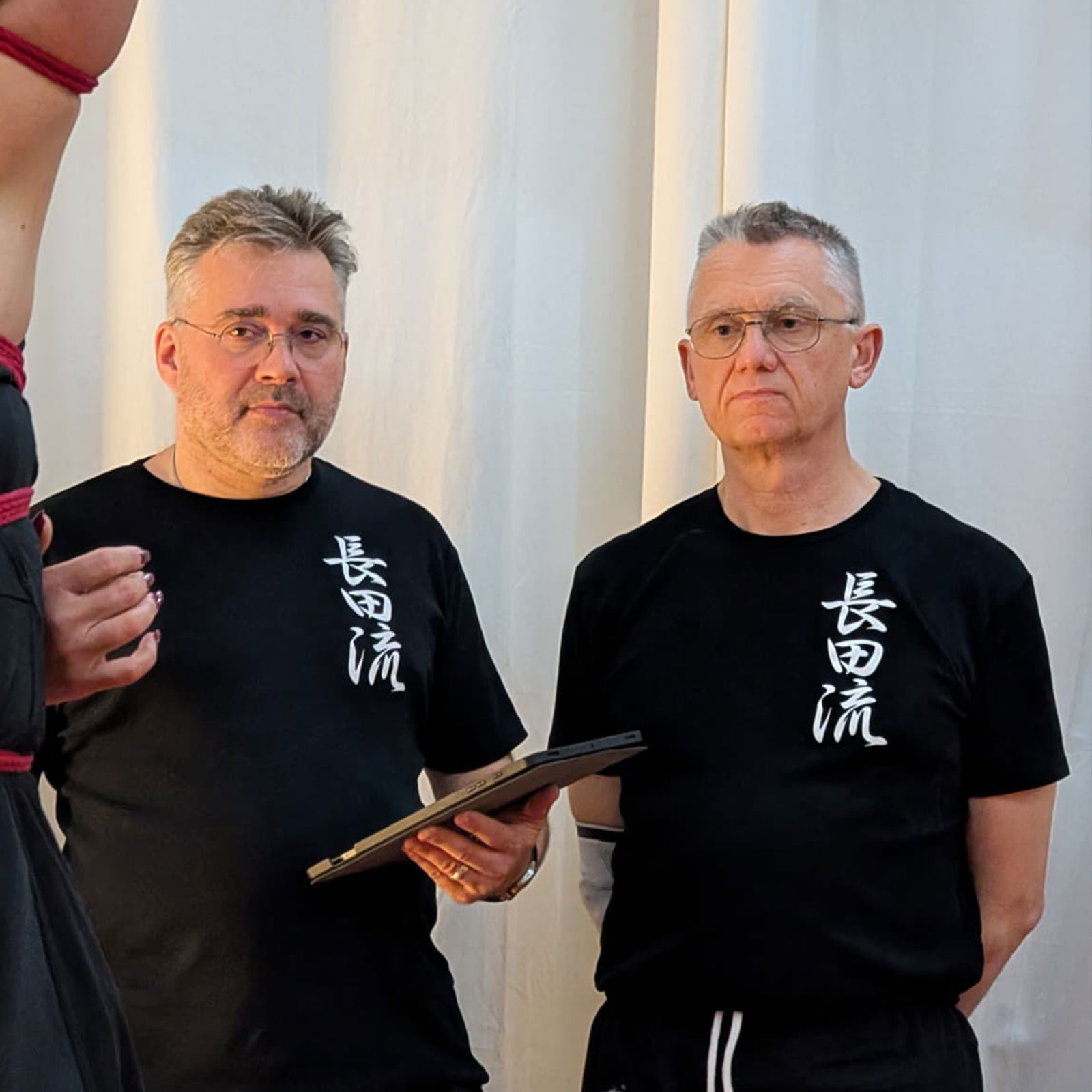
Vinciens and Jack during the Kyu examination
Steve Osada with Shana and Jack during a private lesson
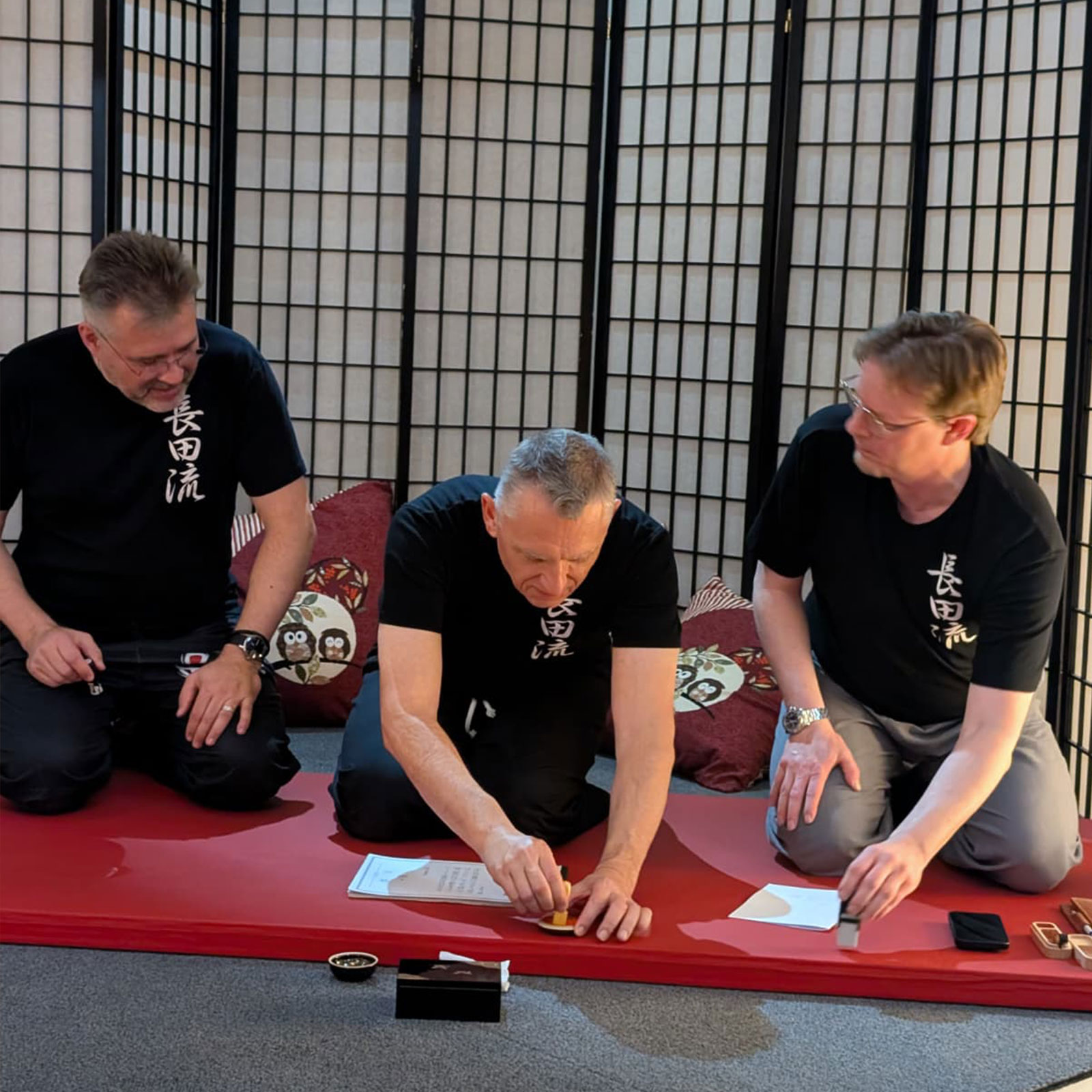
Vinciens, Ibinuphis, and Jack stamping the certificates

After the examinations

After the examinations, Vinciens, Ibinuphis, and Jack withdraw and review each participant, discussing the presented elements and whether the exam was passed.

Once everything has been discussed, the three return and the diploma ceremony begins. The diploma certifies that the student took the exam and met all the requirements for passing. It lists the kyu level tested and the names of the examining instructors. Each instructor adds their personal hanko (seal) to the certificate as a ‘signature.’ The certificates are then handed out individually to the students.

The day concludes with a shared meal, where participants can exchange experiences and enjoy time together with like-minded people.

What is a ryu?

The word ryu is derived from ryūha (流派), which means school, style, or manner. In martial arts, it is customary to first mention the name of the founder and then use Ryū as a suffix (-流 -ryū). The term Ryū is also used to describe a specific style or school of martial arts.

Ryu is very strongly based on the structure of Japanese martial arts. This means that you start at level 9 and then go down to level 1.

Who are these kyu training sessions and exams intended for?

Those who decide to take kyu training and then the corresponding exams want to focus specifically on kinbaku/shibari, particularly Osada ryu. The kyu training is designed to provide a solid foundation in the basics of kinbaku/shibari.

It is a clearly defined path, divided into nine levels (3 basic levels, 3 intermediate levels, and 3 advanced levels). These are dedicated to different topics and thus show a clear path for learners to acquire, improve, and develop their Shibari skills. The basic level is for beginners who have no prior knowledge of Shibari. The intermediate level is for those who have already acquired basic knowledge and skills in Shibari. The advanced level is for those who have already acquired advanced knowledge and skills in Shibari.

Through testing and intensive repetition, the Kyu also offer experienced riggers the opportunity to test their own level. In the process, carelessness in detail is corrected, thus consolidating and improving one's own style.

What requirements must I meet for the kyu examinations?

Both beginners and experienced Fessler practitioners can start with Kyu training. Everyone begins at the same level.

The prerequisite for admission to the exam is the focused and targeted study of the respective content for each kyu. To this end, the learner is taught by us trainers and the necessary knowledge is imparted. Learning does not take place through books and videos, but in practical lessons through working on, experiencing, and learning the respective focus topics. Watching and discussing are just as much a part of it as actively tying someone up. The duration and scope of preparation varies depending on experience. However, without additional practice outside of training sessions, the desired level will not be achievable.

What distinguishes Kyu training from other types of training?

Kyu training is based on a clearly structured curriculum that is specifically tailored to the respective level. The learner intensively engages with the specified topics for the desired level. While the curriculum provides a rough guide, the specific implementation—how exercises and learning content are designed—remains flexible and individually adaptable. The curriculum is divided into three main areas: technical skills, tactical skills, and mental skills. Technical skills include the mastery of basic techniques, combinations of techniques, and the execution of techniques with precision and power. Tactical skills focus on the application of techniques in combat situations and the development of strategic thinking. Mental skills involve the development of mental strength, self-confidence, and the ability to concentrate. The curriculum is divided into three main areas: technical skills, tactical skills, and mental skills. Technical skills include the mastery of basic techniques, combinations of techniques, and the execution of techniques with precision and power. Tactical skills focus on the application of techniques in combat situations and the development of strategic thinking. Mental skills involve the development of mental strength, self-confidence, and the ability to concentrate.

How long does it take before I can take a kyu exam?

The number of training hours depends on the rigger's level of knowledge and their individual learning speed. As the kyu level increases, so does the intensity of the preparation in order to meet the requirements. As a rough guideline, approximately 10 hours of training can be planned for the lower kyu levels. However, the focus is not on the speed at which the exams are taken, but rather on intensive study of the restraints and topics of each kyu level. The journey is the destination.

When I do kyu training and exams, am I allowed to tie other things?

In principle, you can tie people up however you like. How strictly you want to follow the path of Osada ryu is up to you. There is no shibari police and no bondage laws that must be obeyed , even if, unfortunately, such statements and opinions continue to circulate. In shibari, there is basically nothing wrong, but it may not be safe!

Who conducts the examinations?

Only an officially licensed instructor may conduct the examinations. Therefore, we collaborate with Vinciens from Kinbaku Dojo Vienna and Secret56. Vinciens is the highest-ranking instructor in Osada-Ryū and therefore conducts the major examination event. This takes place once a year. The examination consists of a written test and a practical test. The written test covers the theory of Osada-ryu, the history of bondage, and the history of the bondage art. The practical test covers the application of the bondage techniques learned in the Osada-ryu courses.

Aijo also believes that students should not be examined by their own teacher. For this reason, the exam is conducted by another instructor. However, Jack is present as a teacher during the exam.

Do I have to take the exams?

In general, there is no obligation to take the exam. However, without passing the exam, the student may not claim to have achieved a kyu level. This is only possible after passing the exam.
info@aijo-dojo.ch
+41 (0)79 422 53 09
Copyright © 2026 Aijō.
All Rights Reserved.